Open Group turns focus to TOGAF, Agile architecture guidance
The Open up Group will insert further written content to its new Open up Agile Architecture standard shifting forward and supply far more direction on how to use it with TOGAF and the seller-neutral consortium’s other standards.
TOGAF — shortened from The Open up Group Architecture Framework — is the organization’s most preferred standard, with far more than 100,000 specialists qualified via tests that they have progressively taken from property in the wake of the COVID-19 pandemic.
Steve Nunn, president and CEO of The Open up Group, took stock of the newest Agile, TOGAF and other organization architecture developments in this interview with SearchAppArchitecture.
What are the most vital tendencies you happen to be seeing with your members and organization architecture in normal?
 Steve Nunn
Steve Nunn: The 1st one particular is Agile. How do Agile and organization architecture engage in with each other? You can find a faculty of considered that in a planet that involves Agile solutions, you can find no area for what some people call the waterfall technique to architecture — the regular, large-programs-upfront technique.
We, as an corporation, have been adhering to it with desire for some years now, and there is totally practically nothing about the TOGAF standard that are not able to be used in an Agile way. You can find a notion there are all these measures or phases to go via, and it truly is heavyweight. But we have loads of evidence of how it can be used in timeframes that are totally regular with Agile techniques, scrums, standups and all sorts of people techniques. So, you will see far more direction about how TOGAF can be used in that way coming out from us more than the class of this year.
Also, we released the Open up Agile Architecture (OAA) standard that is totally different to TOGAF in intent, but can be used in synergy. OAA will ideally support people who believe that that organization architecture and TOGAF are incompatible with Agile see that we continue to need architecture. We have viewed illustrations of large companies wiping out their organization architecture departments and declaring, ‘We’re executing Agile.’ They are now declaring, ‘We continue to need architecture, since we produced a good deal of things swiftly, but it was not coordinated. We have got disparate components now that we need to convey with each other.’ Guess what? The way to do that is architecture.
I would also anxiety you can find very often a good deal of confusion between agility in a program improvement sense and the solutions that are used. Organizational agility is expected for digital transformation, and you will not get that by just adhering to Agile program improvement techniques. You get that by adhering to Agile architecture techniques.
What responses have you gotten on OAA considering that it grew to become final in September?
Nunn: Does this indicate you can find no additional evolution of TOGAF? The reply is totally not.
The other responses we have gotten is: It can be terrific as far as it goes, but there demands to be a bit far more depth in the standard — which is a thing I totally fully grasp. The members who labored hard on it fully grasp that, too. So, they have a roadmap for including far more depth and written content to the standard. They are adhering to what they call a playbook technique. For illustration, they’ve been performing with our safety forum on the safety playbook for the OAA.
The other responses we have gotten is: You can find TOGAF, OAA, IT4IT and other Open up Group standards. How do I go about making use of them with each other? Or, when do I use one particular and not the other? We have kicked off an action to glance at a portfolio of digital standards. How do these standards engage in with each other in a way that is helpful when you happen to be likely via a digital transformation journey inside your corporation? A good deal depends on where you commence. Just one of the vital elements of bringing the portfolio with each other is the digital practitioner human body of know-how, which is aimed at the techniques you need to just take at different components in your organization’s lifecycle.
Do you ever be concerned the volume of material that The Open up Group puts out could overwhelm people who are just having commenced?
Nunn: Several years ago at our physical situations, we used to operate a session very regularly referred to as ‘I’ve downloaded TOGAF. Now what?’ Just that standard by yourself is 800 internet pages or thereabouts. You can find a good deal to take up. That’s why direction material is vital. All people wants case research. That’s one particular of the values people got from attending our physical situations — the chance to explore people issues with other people who’ve been in a identical problem. It was far more than just networking.
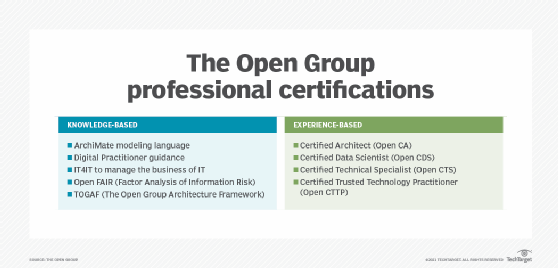
What we try to do, where it makes sense, is operate a person group aimed at people inquiring queries about how to get commenced. We also get issues out via white papers and blogs. There are people who talk to on that, of class. We are not a consultancy. We will not profess to advise people on how to do their architecture perform. We just try to offer the applications to support them. All of this things is freely downloadable and usable. They could need support to employ it from time to time. A different way of executing that is via training and certification. We advise having at minimum some people qualified in these standards. If they then prepare their colleagues, you’ve got got a widespread language so that you can promptly get benefit from just that by yourself.
The other issue that is new is the Architect’s Toolkit we put on our web site late past year. That is meant to accept the point that all these standards are applications. You will not have to comply with them slavishly, and you will not have to use one particular certain device to do everything. You decide the very best device for the job or problem.
Do you have any sense how a lot of companies get organization architecture applications?
Nunn: You can find very a range of applications vendors. Some applications are really costly. What I have viewed more than the years with case research at our situations is people have a tendency to commence tiny. They may possibly commence with a absolutely free device. They make the case inside an corporation for the benefit of modeling and the benefit of a device, to support them get the funds to get a far more refined device with higher features. Of class, bigger companies with large budgets could go straight into purchasing a big device.
If you try to do serious organization architecture without the need of applications, you only get so far — or you need a good deal of people, since capturing issues in PowerPoint and other non-EA applications will get sophisticated very swiftly. So, the applications are an vital component of the architecture perform that goes on. As we see the demand from customers for EA go up, the demand from customers for applications is likely up, too.
What’s the most profound effect you’ve got recognized as a result of the COVID-19 pandemic?
Nunn: A vital part of an architect is bringing with each other the technical side of the household and the company side of the household — the stakeholders — and speaking. Typically, that is completed face-to-face, perhaps with a lot of Publish-it notes all more than the area, having people’s soreness factors down. I have read that functionality is just tougher to supply effectively in a digital sense. I’m confident there are approaches of executing it, but you continue to will not get that exact same relationship that you would have if you ended up operating a session in a place.
A very constructive change is the demand from customers for organization architecture has absent up in no tiny component since of the area it plays and the benefit it provides to digital transformation. From what I have examine — and we have had speakers mention it — digital transformation in a lot of companies has been enormously accelerated by COVID-19, since of the need to supply goods and providers in a digital or no-touch way to shoppers. Just one of the large analyst companies explained COVID-19 had probably accelerated digital transformation by two or three years in the case of a lot of companies out of complete necessity. They ended up probably down that path, but they’ve really had to adapt and speed up their digital transformation. It can be a question of survival.
Have you sensed elevated employing of organization architects?
Nunn: Sure. I have got anecdotal evidence from some of our member companies, notably the large kinds. They’ve practically explained, if the benefit of organization architecture was staying questioned in the face of everything staying Agile, then it truly is flipped totally. Now they are having difficulties to cope with the demand from customers for organization architects in their companies. Even some companies that instituted employing freezes all through the past year since of the pandemic are often making exceptions when it comes to organization architects, since they see it as a valued ability.
What will be the most vital spots of concentrate for The Open up Group shifting forward?
Nunn: We’ll be coming out with a range of new TOGAF collection guides all through the class of this year. A good deal of the perform in our architecture forum is likely into direction on how to use TOGAF in different environments or in relationship with other standards, since that is really what people are telling us they are seeking for.
IT4IT model 3. is likely to be major with a concentrate on digital item administration. The Open up Footprint Forum is tackling what we can do to support battle local weather modify, or at minimum keep track, and decrease carbon and other vitality emissions. That perform is vital and may possibly basically be one particular of the fairly rare events where The Open up Group will get recognized in the planet outdoors our neighborhood.
Ahead of then, the [Open up Subsurface Knowledge Universe] OSDU Forum is likely to start the 1st mainstream model of the open up supply implementations of their standard. It can be in the subsurface component of the oil and gas industry that is essentially switching the way knowledge is used from exploration to make it far far more analyzable. The forum has developed swiftly, and just about anyone who is any person in that industry is involved. They have far more perform to do, but I feel that will be a major stage forward.
As a normal pointer, a vital concept for this year and likely forward is the use of open up standards to support address precise company problems or build a following generation of devices that are dependent on people standards, with all the positive aspects that openness brings.
Editor’s take note: This interview was edited and condensed for length and clarity.